
Semi-automatic strapping machines
A semi-automatic strapping machine combines Automation with the intervention of the operator. It is an ideal option when you need flexibility, frequent format frequencies or a strapping point that does not require a fully automatic line, but you want repeatability and better control than in a completely manual strapping.
Our semi-automatic strapping solutions
In SAIZAR we propose two main approaches of semi-automatic strapping, depending on the level of automation and type of work that you are looking for.
Semi-automatic with manual strapping system
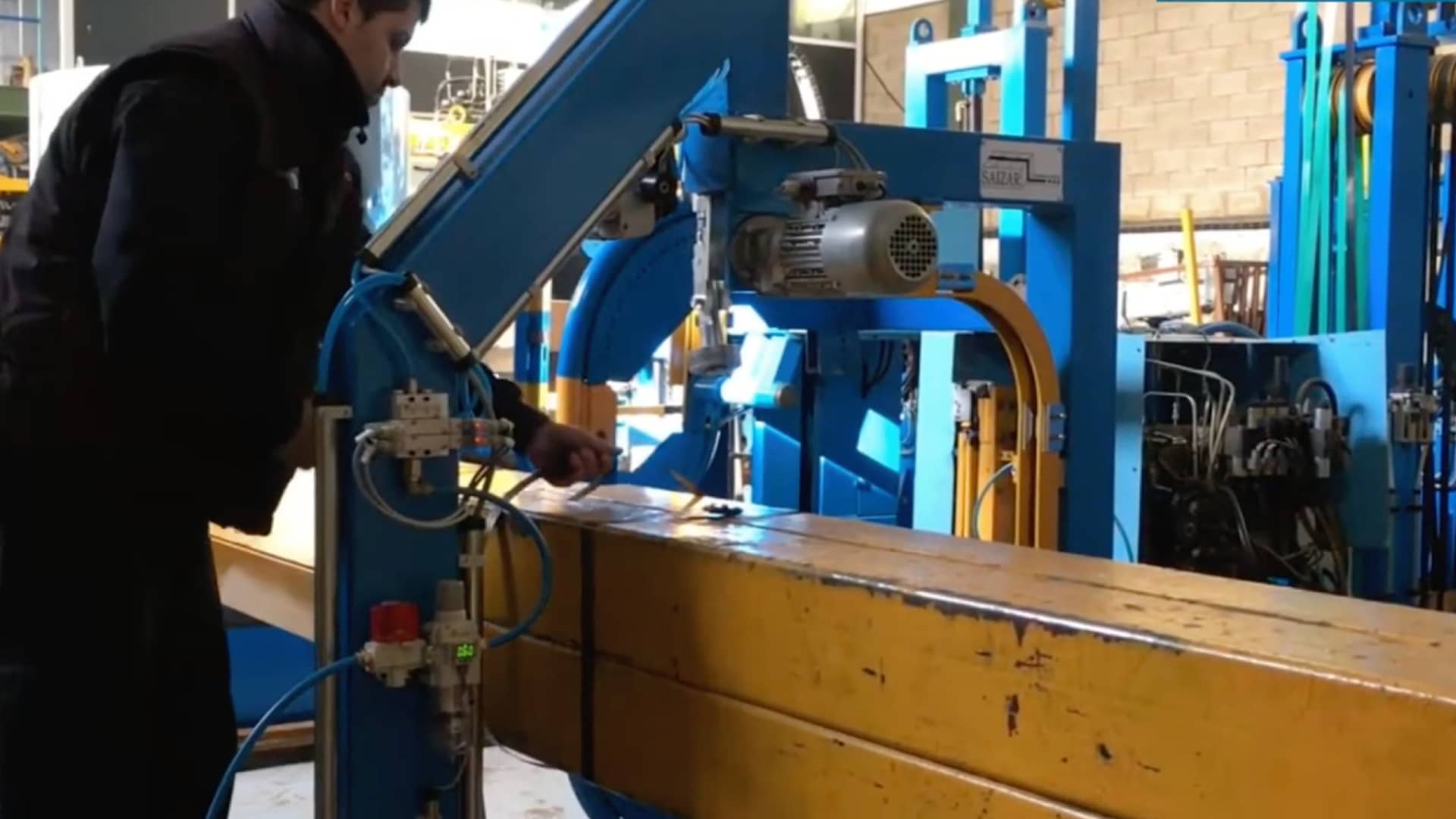
In this case, the operator introduces manually the strap into the bow feeding system and gives the command for the strap to automatically advance around the product to be strapped. Then, the operator introduces the strap into a pneumatic strapping tool (or another manual tool) to manually perform the collection, tensioning, sealing and cutting process.
Strap ranges:
- PET & Steel: from 16 mm to 32 mm.
When does it fit particularly well.
- When you need maximum flexibility in operation and format.
- When you prefer to maintain tool sealing, but want to facilitate the insertion of the strap through the perimeter of the product to be strapped.
- When the aim is to reduce costs compared to semi-automatic application with an automatic head.
- When you want to keep staff at the strapping station.
Operating mode
The operator must manually insert the strap into the bow feeding system and will be the one to give the command for the strap to be fed automatically.
Once the strap has been wrapped around the material to be strapped, it must be manually inserted into a pneumatic strapping machine so that the strap can be manually collected, tensioned, sealed and cut.
This strapping system can use either steel or polyester strapping, from a minimum width of 16 mm to a maximum width of 32 mm in the case of polyester strapping; in contrast, steel strapping can be used from a width of 16 mm to 32 mm.



Semi-automatic with automatic strapping head
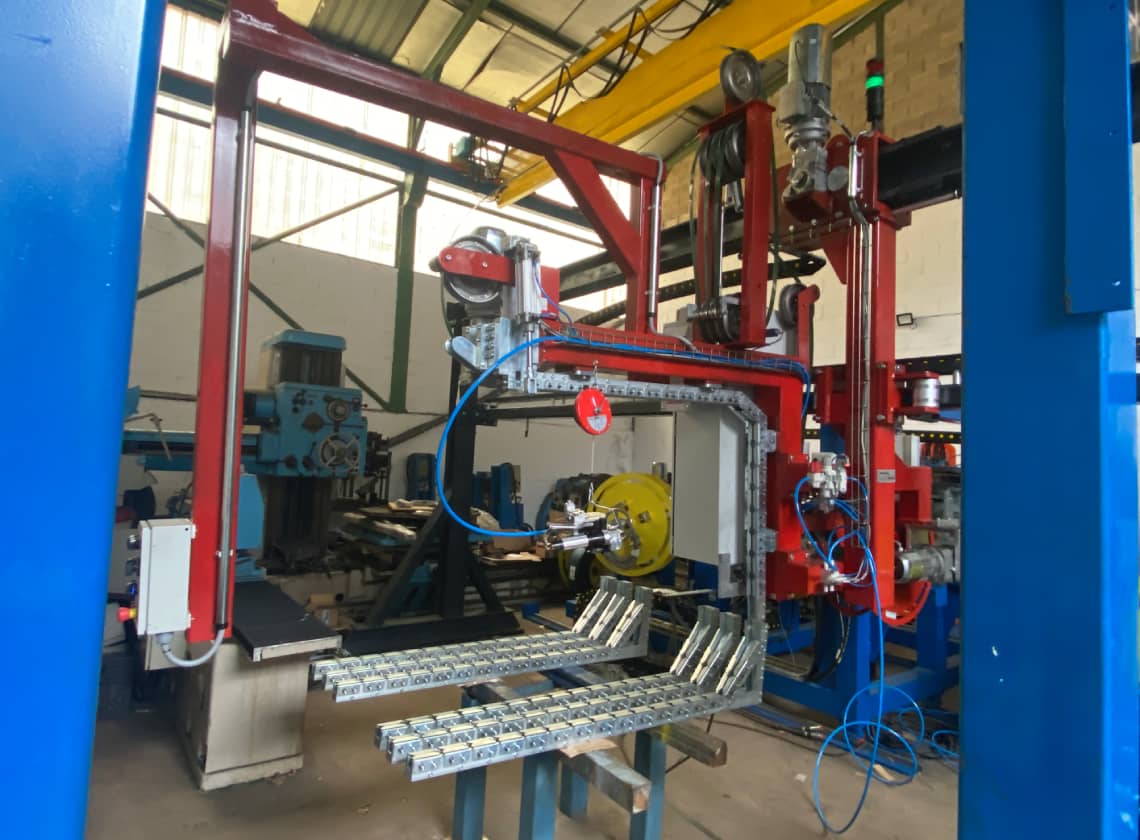
In this kind of system, the strapping is performed with an automatic strapping head, with the operator moving the strapping head vertically, either to move it closer to or further away from the product to be strapped, and giving the command to start according to their needs.
We can work with:
- Steel strap and polyester (PET) strap.
- Width of 16 mm to 32 mm.
When does it fit particularly well.
- When you are looking for a semi-automatic operation, but want tensioning and sealing to be handled by the strapping head for consistency.
- When you need an stable strapping point with process control.
- When the aim is to reduce costs compared to automatic application..
- When you want to keep staff at the strapping station.
Operating mode
The operator starts up the strapping machine so that the strap is fed to the operator’s position, who must then insert the strap into the strapping jaw after wrapping it around the material to be strapped. The operator must then lower the head onto the material to be strapped and the strapping machine will automatically collect, tension, seal and cut the strap.
Once the strapping is complete, the operator must manually raise the head to its initial position. This strapping system can be used with steel strapping and polyester strapping, from a minimum width of 16 mm to a maximum width of 32 mm.
Available types of strapping (depending on product)
In semi-automatic strapping Projects we can define the strapping according to the geometry of the product and the purpose of the packaging. We usually work with the following options:
Transversal
Longitudinal
Circunferencial
Radial
Perimeter
In-plant benefits
More flexibility:
than a fullly automatic instalation for format changes and variable requirements
Better process control:
compared to fully manual strapping especially with an automatic head
Adaptation to steel or PET:
depending on the load and your operations
Installation options:
fixed or sliding solution, depending on how the product arrives at the strapping point
Contact our technical department for a customised solution
How to choose your semi-automatic strapping solution
To recommend the best configuration, it is most useful to define:
Product to be straped:
(type and minimum/maximum measurements)
Weight:
and required stability
Type of strapping:
transversal, longitudinal, circunferential, radial, perimeter
Type of strap:
steel or PET, and width/thickness
Strapping solution:
automatic strapping head or manual strapping tool
Material movement:
how the material is moved to the strapping point (carriage, coil car, conveyor etc.)
Integration and installation options (fixed or movable)
We can consider scenarios such as:
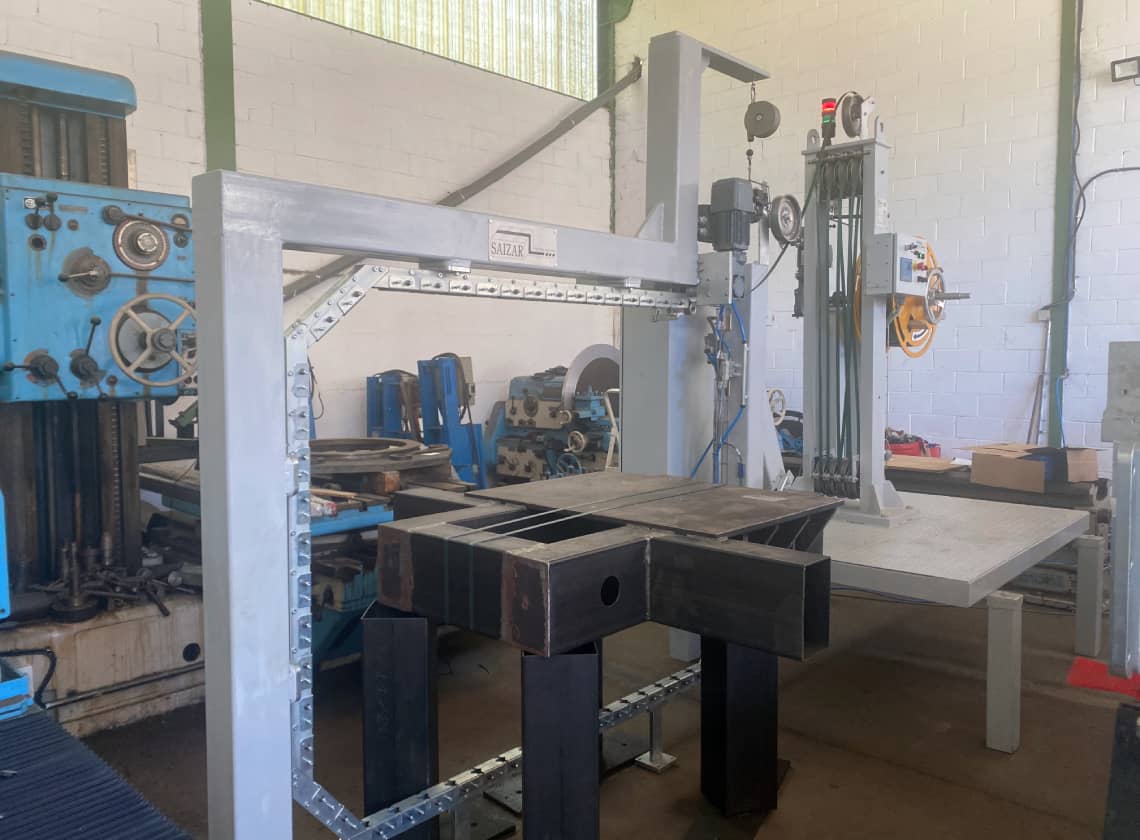
- The strapping machine in a fixed position and the product is displaced to each of the strapping points.
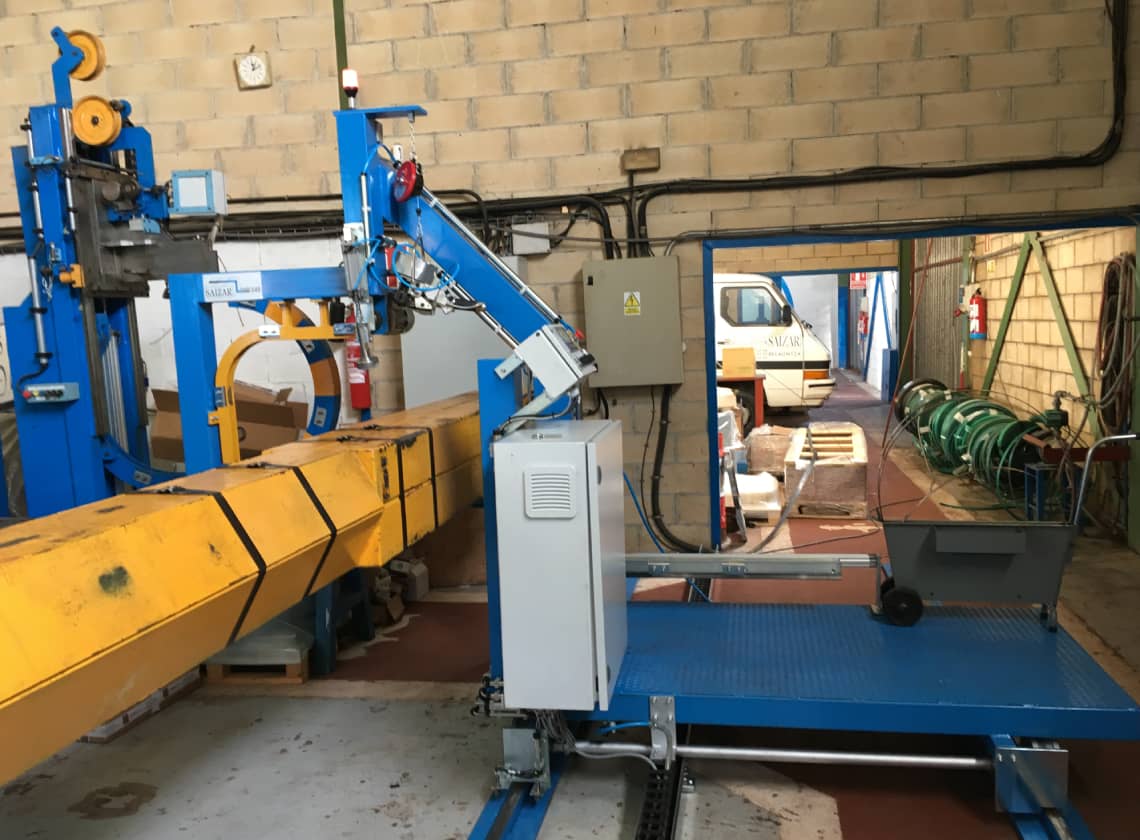
- The strapping machine with lateral displacement for strapping in different positions as needed.
- Semi-automatic configuration in which strapping is performed with a manual tool, with the machine fixed or movable.
Frequently asked questions
What is the difference between a semi-automatic strapping machine and an automatic one?
In semi-automatic applications, the operator performs some steps in the strapping process (for example, moving the strapping head or tensioning, sealing, and cutting the strap). In automatic applications, the cycle and in-line integration are more automated, and no operator is required during the strapping process.
Can we strap with steel and PET?
Yes, in semi-automatic mode, we work with steel and PET; the range depends on the system chosen.
What width ranges do we handle in semi-automatic mode with an automatic strapping head?
From 16 mm to 32 mm with steel or PET
And in the system with a manual tool?
With steel or PET we work with 16 to 32 mm strap.
What exactly does the operator do in the system with an automatic head?
Give the start command, manually move the strapping head, activate the final strapping process, and raise the strapping head to its original position.
What does the operator do in the system with the tool?
Introduce manually the strap into the bow feeding system and perform the tensioning/sealing/cutting with a strapping tool (e.g., pneumatic).
What type of strapping can we define?
Transverse, longitudinal, circumferential, radial y perimeter, depending on the product and objective.
The machine can be fixed or mobile?
Yes, we can offer fixed semi-automatic machines, lateral displacement or even with frontal displacement machines, depending on how you need to strap.
What information do you need to prepare a quote?
Product, weight, type of strapping, minimum/maximum measurements, and type of strap (steel or PET), as well as how the product arrives at the strapping point.
Which option should I choose: automatic head or manual tool?
If you are looking for more repeatability in sealing and a more efficient process, the automatic head is usually a better fit. If you prioritize flexibility and operational simplicity, as well as lower costs, the manual tool may be the best option.