
Complementary elements
Conveyor and tilters
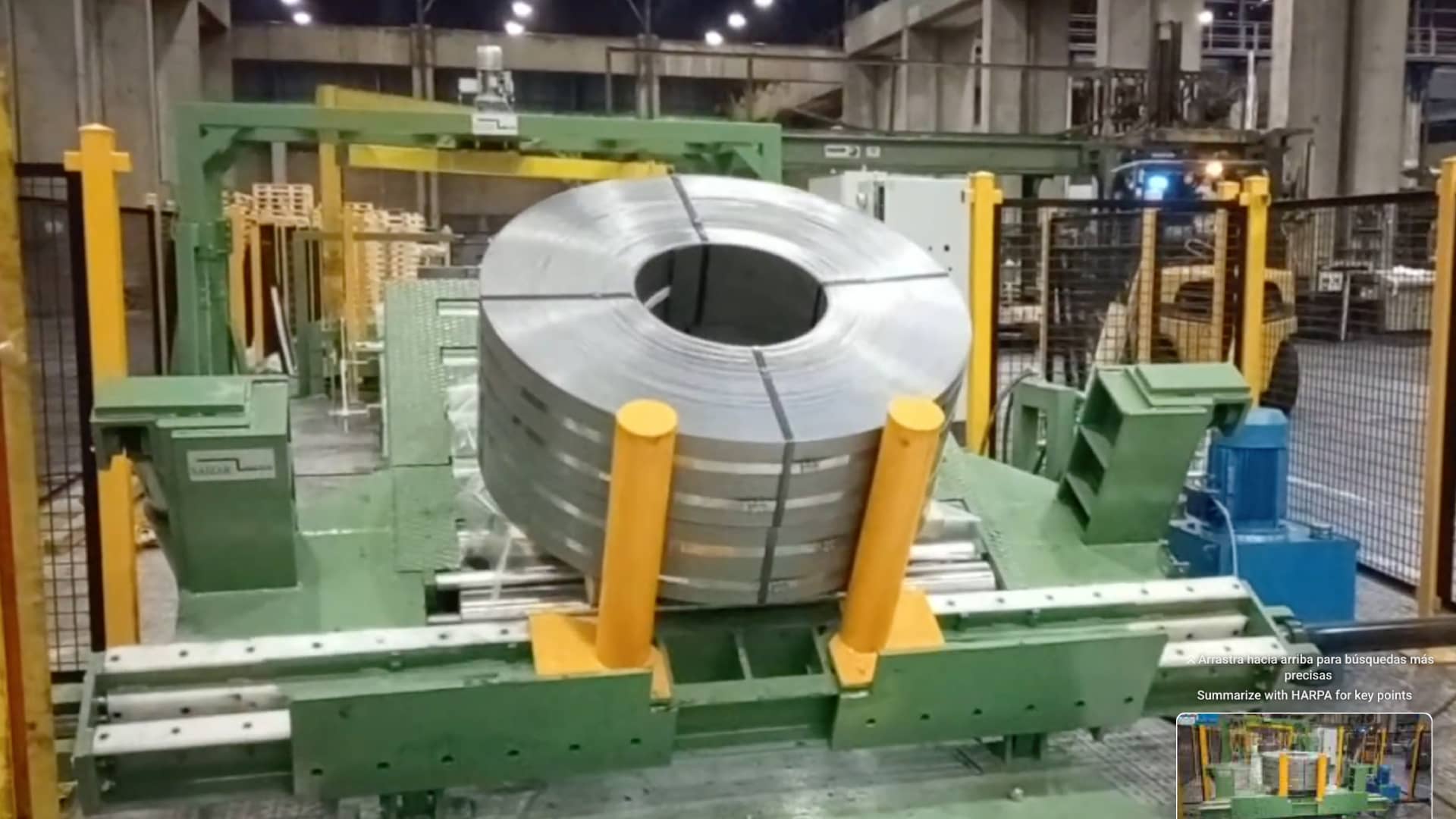
At SAIZAR, we integrate conveyors with or without a tilting mechanism into our packaging lines to move products between stations and position them as required for each stage of the process. This product line is part of our range of complementary strapping and packaging equipment and is incorporated into the design of many automatic lines.
Their function is clear: to transport, transfer, and when the project requires it turn or reposition the product so that it arrives correctly at the strapping, weighing, wrapping, or labelling station, or at the next stage of the process. In our projects, both the conveyor and the tilters are components that can be integrated into the production line.
How we design these systems at SAIZAR
We design each solution to meet specific needs, taking into account the type of product, its dimensions, its weight, the expected productivity, and the available floor space. We do not offer the conveyor or the tilters as standalone equipment, but rather as an integral part of the overall production line logic.
Product movement and transfer
The conveyor is used when you need to move the product from one station to another within the line, maintaining a controlled path that is consistent with the rest of the process. In various SAIZAR projects, it is used as a transport option in automated lines and in projects involving packages, coils, or other industrial products.
Integration with strapping, packaging, and auxiliary stations
When the process requires a change in the product’s position, we integrate the tilter into the production line. This equipment is included in our range of automated production lines along other complementary components such as lifting systems, rotating systems, weighing, labelling, and wrapping systems, confirming its role as auxiliary equipment for integration at the end of the line.
Adaptation to the product, layout, and productivity
The choice of conveyor or tilter depends on how the material is fed into the system, how it needs to be discharged, and the position in which it needs to reach to the different workstations. SAIZAR’s questionnaires collect data such as product type, weight, how the product is fed in and discharged, productivity, available space, and means of transport, precisely to ensure that these types of systems are properly sized.
Common features of these systems:
- Integration into the automatic strapping and packaging line.
- Configuration with a conveyor cart, a tilter, or both, depending on the project.
- Design tailored to weight, dimensions, productivity, and plant layout.
- Coordination with other equipment such as strapping, weighing, labelling, lifting, or wrapping.
Common Applications
These systems are particularly well-suited for lines where the product must not only be moved but also repositioned or transferred between stations before or after strapping. In SAIZAR’s technical documentation, this equipment is associated with products such as sheet metal coils, wire coils, bundles of profiles, bars, tubes and pipes, bundles of sheets, and automatic strapping/packaging lines.
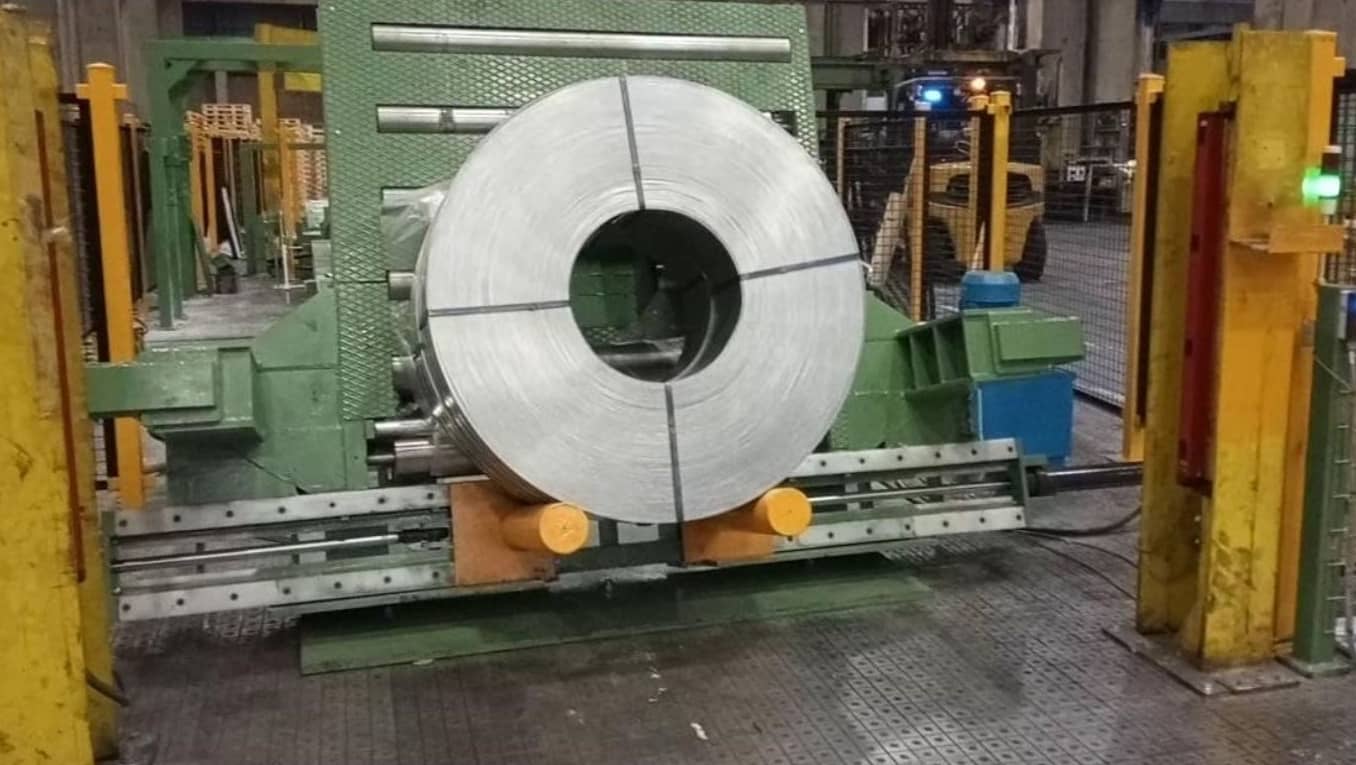
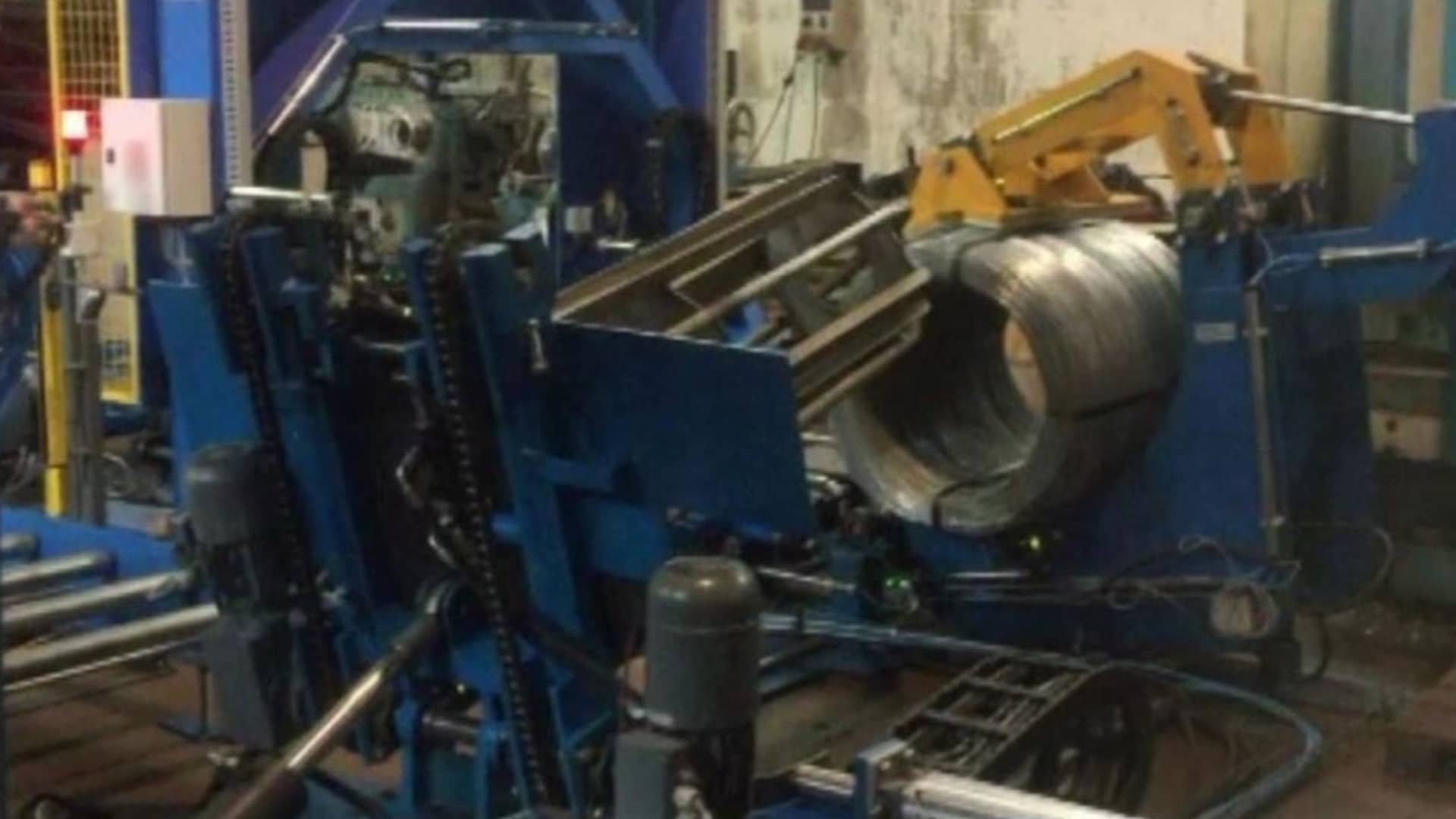
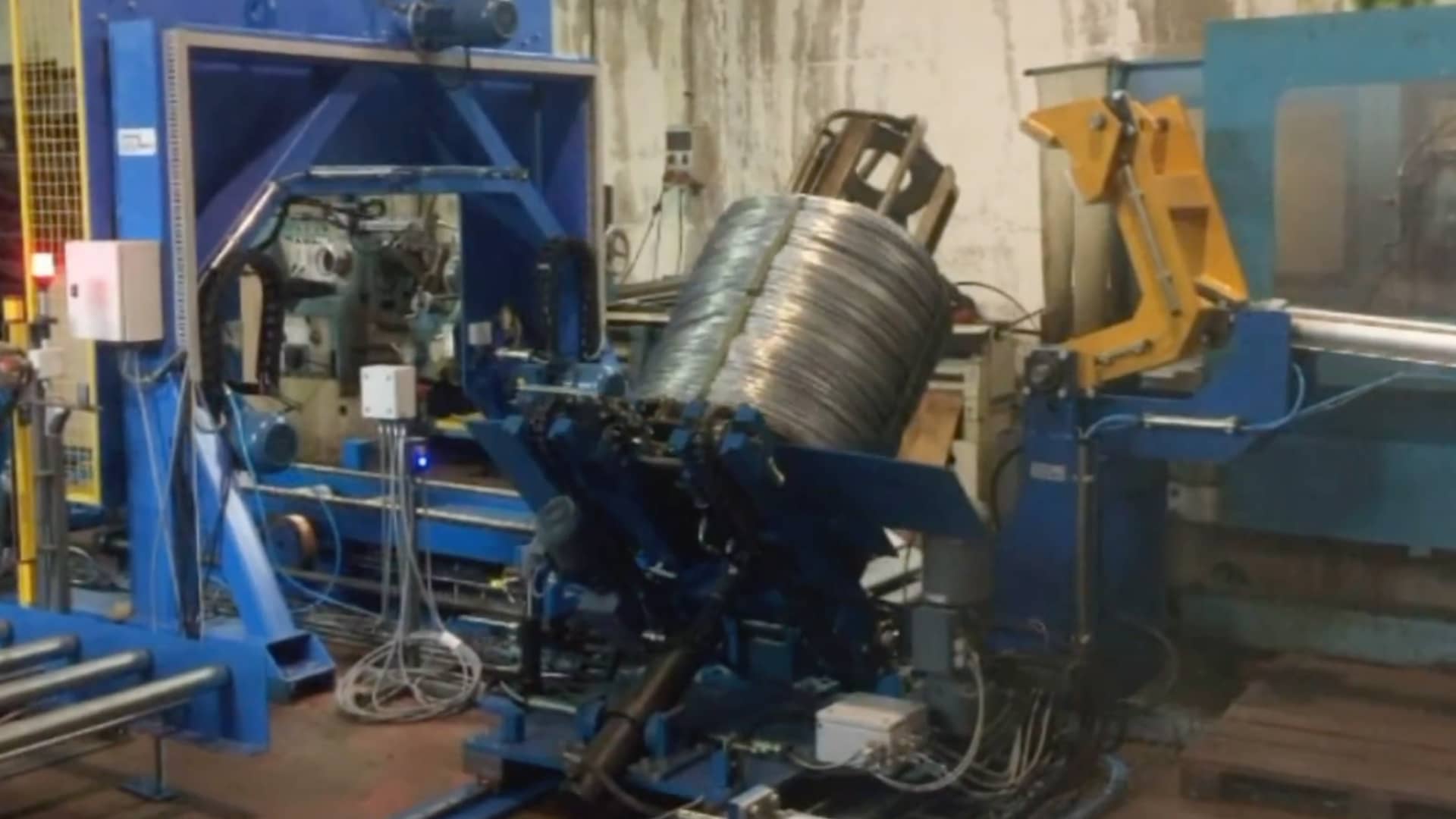
They are also useful when the product requires a different movement pattern from a fixed conveyor, or when the plant layout requires transfers and changes in orientation between different work zones. This need is reflected in the design developed by SAIZAR, where the conveyor cart and the tilter appear as separate pieces of equipment within the same line.
SAIZAR conveyor and tilters
Benefits on site
Integrating conveyors and tilters into the production line helps ensure that the product moves in a more controlled manner and each station operates with the material in the correct position. This simplifies the logic of the process and reduces intermediate operations outside the production line.
Common benefits of this solution:
- Improved product transfer between stations on the line.
- Possibility to adjust the position of the material when the process requires it.
- More integration with other end of line equipments.
- Customized solution based on the product, workflow, and available space.
Contact our technical department for a customised solution
What we need to prepare a proposal for you
To properly design the system, we need to know the product, its weight, its minimum and maximum dimensions, the target productivity, and the type of equipment it needs to move through the line. It is also important to know the position in which the material arrives at the strapping station and what other equipment you wish to include in the project.
SAIZAR’s questionnaires also ask for details on the available floor space and photographs of the installation area and the product, as this information helps tailor the design of the cart or turner to the specific conditions of the installation.
Standard information required to prepare a quote:
- Product, weight, and dimensions.
- Expected line productivity.
- Process for receiving, transporting and evacuating the material.
- Available space and equipment to be integrated with the system.
Frequently Asked Questions (FAQ)
What is the difference between a conveyor and a tilter?
The conveyor is designed to move the product between positions or stations; the tilter is used when you also need to change the position or orientation of the product within the process. Both are listed as separate pieces of equipment within SAIZAR’s automated lines.
Are these systems integrated into the line or do they operate separately?
We design them as part of the strapping and packaging line, integrated with the rest of the project’s equipment.
What types of products are they used for?
They are used in projects involving sheet metal coils, wire coils, profile bundles, bars, tubes, pipes, and sheet bundles, as well as automatic strapping/packaging lines in general.
Can they be combined with other equipment?
Yes, in SAIZAR projects, they are combined with other equipment such as lifting, strapping, weighing, labelling, wrapping, compacting, or turning systems.
What information do you need to recommend the right solution?
Product, weight, dimensions, productivity, method of transport within the plant and available installation space.
Can we include just a conveyor without a tilting mechanism?
Yes, SAIZAR’s public documentation refers to conveyors with or without a tilting system, so the configuration depends on your process requirements.
Can the tilter be integrated on its own?
Yes, in the questionnaires, the tilter is listed as a standalone component within the automatic line.
Do you offer turnkey projects and technical support?
Yes, this equipment is part of SAIZAR’s integrated solutions for automatic strapping and packaging lines, and is sized in conjunction with the rest of the project.