
Packaging lines
Profile bundles
In SAIZAR we design packaging lines for profile bundles to automate end of line operations and achieve a more stable, reliable and repeatable. The line is adapted to the product, the productivity you need, and the available space, incorporating the necessary stations to ensure that the bundle emerges aligned, formed, strapped and ready for shipment.
This type of solution makes a lot of sense when you are working with bundles of variable geometry profiles and need to maintain control over the bundles shape, the material protection and the consistency of the strapping. In this kind of setup, it is common to work with different geometries and bundle configurations.
How we set up your line at SAIZAR
Each line is designed based on your product and your actual production process. To do this, we take into account variables such as bundle dimensions, weight, input and output of the product, productivity, type of strap and any additional equipment you wish to integrate.
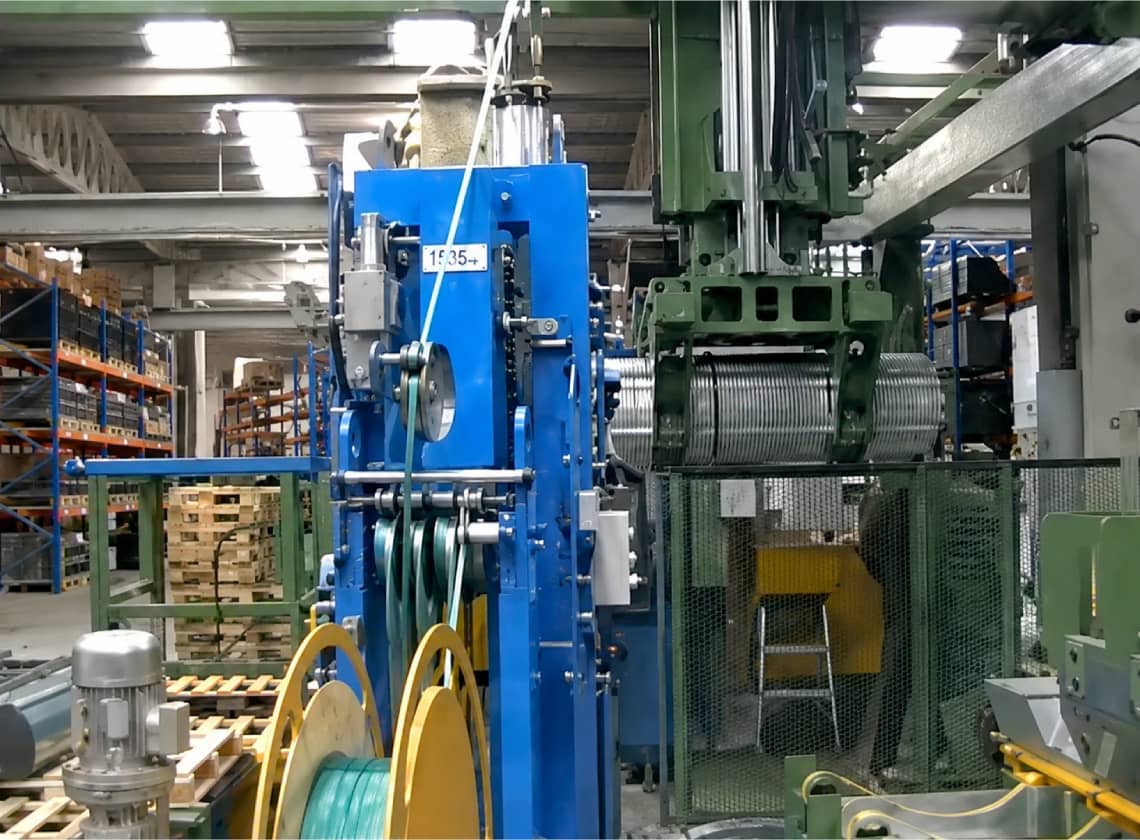
Bundle entry into the line
We can design the line so that the bundle reaches the strapping position centered, maintaining the same centerline, even if the width changes, or aligned to one side, depending of how the product exits your previous process. This decision directly affects the design of the various pieces of equipment.
Fixed or lateral displacement Strapping Machine
The strapping station can be designed with a fixed strapping machine and the bundle moving to each position, or with a strapping machines moving laterally while the bundle remains still. We can also propose different strapping positions, depending on the size of the bundle to be strapped.
Common equipments in a profile packaging line
Transport, positioning and transfer
We integrate the line with the conveyor system that best suits your facility: roller conveyors, chain conveyors, or lifting systems, among others. When the project requires it, we also incorporate turntables or transfers between stations to ensure that the bundle arrives in the correct position for each operation.
Forming and conforming of the bundle
Whether the profiles arrive individually or you need to better consolidate the bundle’s geometry, we integrate forming systems and conforming systems before the strapping. This ensures that the assembly retains its shape throughout the process and minimizes misalignments or gaps. In our forming solutions, we work with profiles of various types and dimensions, while the shaping process is performed on the profile bundles prior to strapping.
Transversal automatic strapping
In profile bundles, the strapping is typically applied in a transversal way, strapping in different positions depending on the size and length of the bundle. We work with steel strap or polyester strap (PET), and sealing methods as notching, with linkers or TIG welding for steel strap, and with friction-vibration for polyester strap.
Packaging protection: cardboard, corner protectors and wooden blocks
If you want to protect the bundle of profiles against the contact with the strap or improve the bundle’s presentation, we can integrate the automatic insertion of cardboard, corner protectors, protectors or wooden blocks among others directly to the strapping station. This is specially useful when you need to prevent marks, facilitate handling with a crane, or comply with a specific logistics and quality standard.
Weighing and labeling
Apart from the main strapping station, the line can be equipped with a weighing scale and automatic labeling, depending on your traceability requirements. This equipment allows for a much more comprehensive end of line solution that is tailored to subsequent storage and shipping.
Strapping and packaging systems by SAIZAR
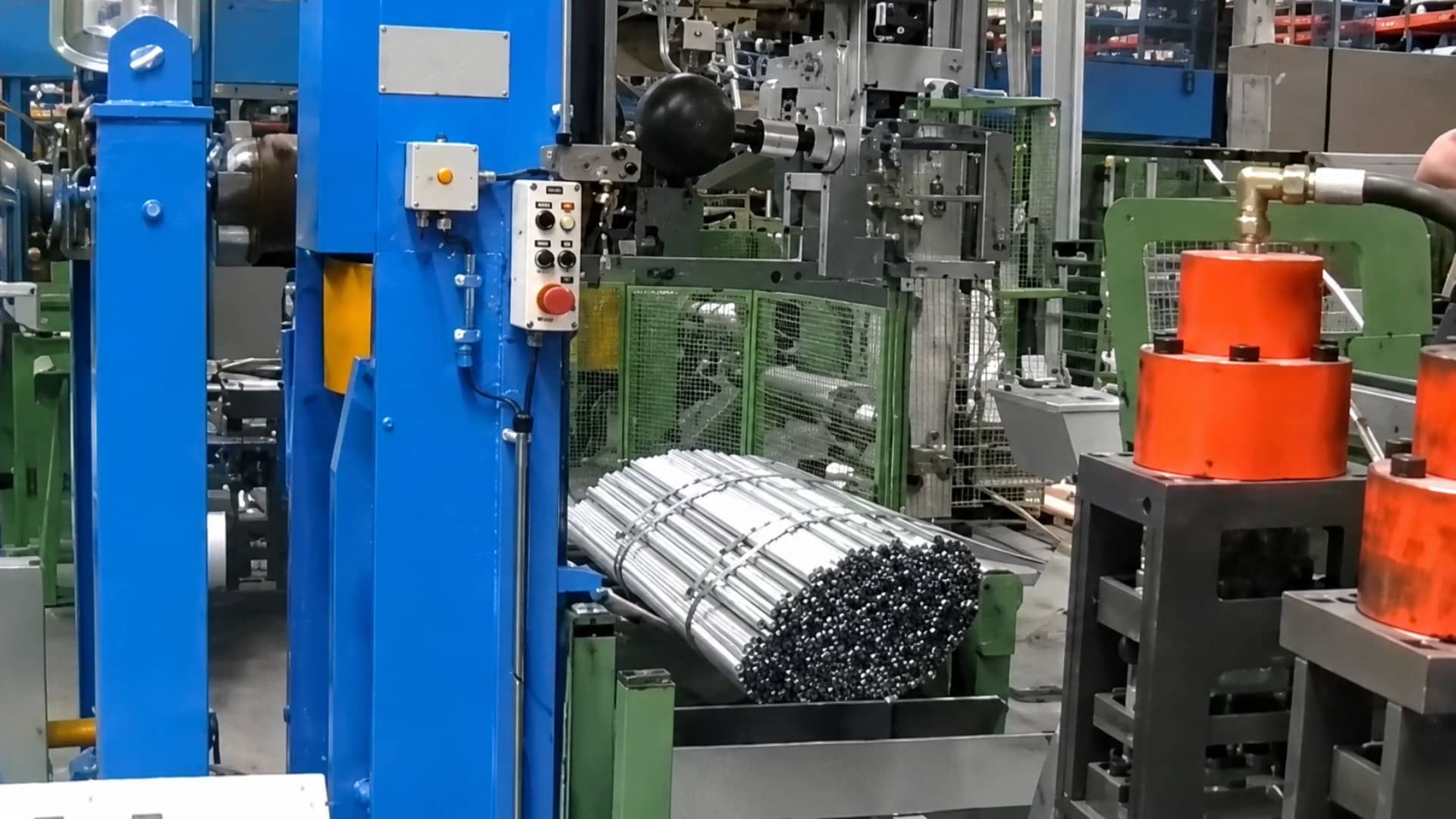
On plant benefits
More bundle stability:
thanks to the combination of aligning, forming, and shaping before strapping
More consistent strapping:
by selecting the optimal setup: mobile bundle, mobile strapping machine, or a hybrid solution, depending on your process
Protection of the product:
with cardboard, corner protectors, blocks or protectors when is needed for the profile bundle
More traceability:
by integrating weighing and labeling into the same production line
Real integration into your facility:
with conveyor systems, lifting equipment, and auxiliary equipment tailored to your layout
Flexibility in terms of consumables and sealing methods:
as it can use either steel or PET strap and select the appropriate seal for the application
Contact our technical department for a customised solution
What do we need to prepare a quotation for you
To design the line accurately, we usually need the following information:
Product to be strapped:
weight and maximum bundle temperature
Width, height and length:
minimum and maximum package dimensions
Size and type of the profile:
or the material’s section
Reception and evacuation of the product:
how you want to receive and evacuate the product
Target productivity:
in bundles per hour
How the bundle is moved and discharged:
roller conveyors, chain conveyors, lifting systems, or other systems
Type of strap:
width/thickness and type of seal
Number of straps per bundle:
and whether you need additional equipment such as forming, introduction of protectors, weighing, or labeling
It’s also very helpful to have a photo of the bundle and an image of the space where the installation will take place, as this speeds up the technical planning process and reduces the number of revisions to the proposal.
Technical service and spare parts
In addition to design and integration, we provide technical support and spare parts during installation to ensure the line remains operational. We offer customized solutions and a range of equipment and modules that allow us to configure everything from a strapping station to a more comprehensive packaging line.
Frequently asked questions
What is the difference between a strapping machine and a profile packaging line?
A strapping machine handles the strapping process; a packaging line also incorporates conveyor systems, bundle forming and shaping, traceability, and bundle discharge systems.
Can we work with profiles of different geometries?
Yes, in this type of solution, it is common to work with variable-geometry bundles, and forming systems accommodate various formats, allowing the line to be adapted to the customer’s needs.
Does the strapping machine have to be fixed?
No, we can configure the stationary strapping machine so that the bundle moves between positions or the strapping machine with lateral movement while the bundle remains stationary.
Can we strap with steel and PET?
Yes, we design the station to work with steel or polyester strap, depending on the application, the bundle’s requirements, the bundle’s volume, and the storage system used for it.
What types of sealing can you integrate?
For steel strap, we can use notching, with linkers, or TIG welding systems; for PET strap, we use friction-vibration. The choice depends on the product, the required tension, and the customer’s needs.
Can protectors be inserted automatically?
Yes, we can integrate cardboard, corner protectors, wooden blocks, or labels directly into the strapping station.
Does it make sense to include bundle shaping?
Yes, when you need to maintain the bundle’s shape before and during strapping. Forming helps stabilize the bundle and improve process repeatability.
Can we add weighing and labeling to the line?
Yes, these are two common equipment when you need to track and monitor a bundle before shipment.
What information do you need to provide a quote?
Product type, weight, minimum and maximum dimensions, throughput, how the product is fed into the line, which conveyor systems you want to implement, strapping type, sealing method, and any additional equipment you wish to integrate.
Can you adapt the layout to the available floor space?
Yes, that is why we ask for information about the current layout, your specific needs, and photos of the area: so we can tailor the design of the countertop to fit your actual space.